Semiconductors & Electronics
Semiconductors & Electronics
Electronics &
Semiconductors

ESD capable
Protection of sensitive electronic components

Electrically conductive
Good weather resistance, protection against thermomechanical stress, low susceptibility to corrosion

Electrically insulating
Prevents current flow and protects against electrical circuits
ESD capable
Protection of sensitive electronic components
Electrically conductive
Good weather resistance, protection against thermomechanical stress, low susceptibility to corrosion
Electrically insulating
Prevents current flow and protects against electrical circuits
ESD capable
Protection of sensitive electronic components
Electrically conductive
Good weather resistance, protection against thermomechanical stress, low susceptibility to corrosion
Electrically insulating
Prevents current flow and protects against
electrical circuits

Tight tolerances
Precision manufacturing for highly accurate fits and applications

Chemically resistant
Resistant to aggressive chemicals

Low weight
Weight-saving compared to metal solutions
Tight tolerances
Precision manufacturing for highly accurate fits
and applications
Chemically resistant
Resistant to aggressive chemicals
Low weight
Weight-saving compared to metal solutions

CFRP End Effector for Wafer Handling
#APPLICATIONEXAMPLE
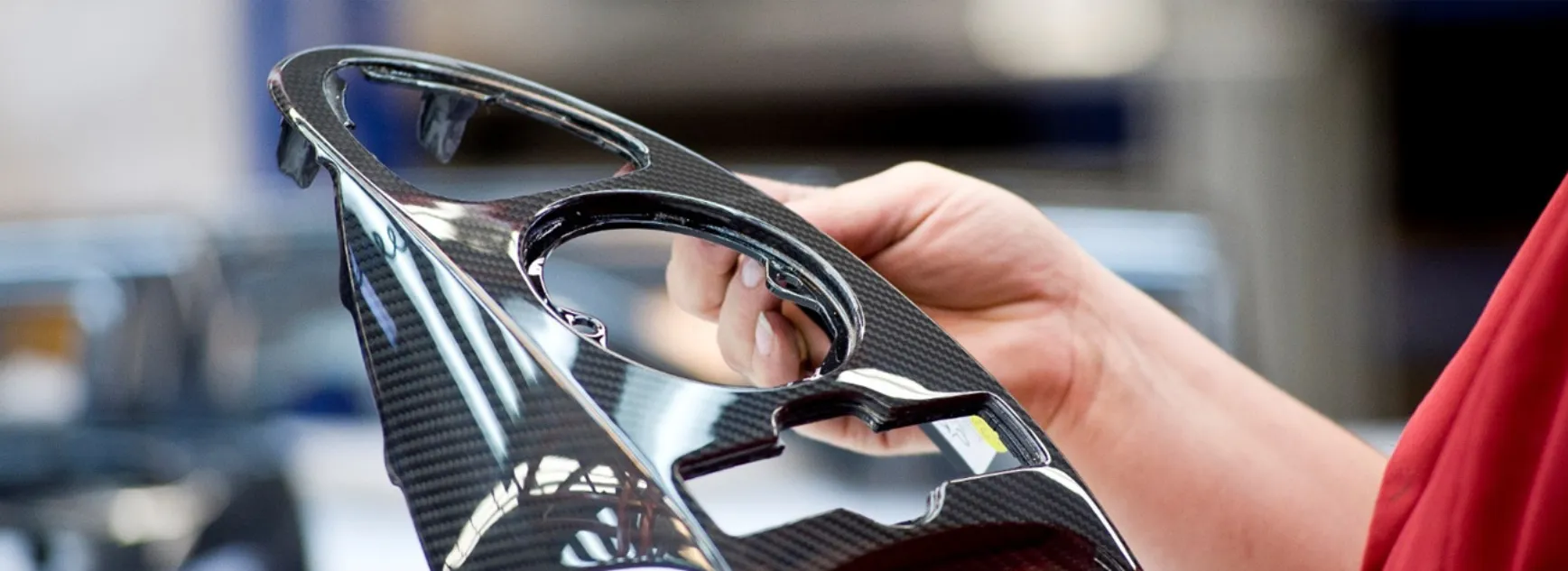
For automated semiconductor production, we develop and manufacture customized CFRP end effectors designed for maximum precision and gentle wafer handling. Thanks to integrated vacuum channels, handling is damage-free and efficient. The combination of high stiffness and low weight enables precise positioning, a wide range of motion, reduced energy consumption, and shorter cycle times. In addition to a long service life, temperature resistance from –50 °C to +200 °C, and excellent corrosion resistance, the end effector stands out in particular due to its low weight, with a material density of only approx. 1.5 g/cm³. Our engineering expertise is reflected in precise manufacturing and individual customization: from optimized vacuum guidance to tailor-made geometries, we work closely with our customers to develop solutions that redefine performance, efficiency, and reliability.
Additive manufactured connectors and test bench components for electronics development
#APPLICATIONEXAMPLE
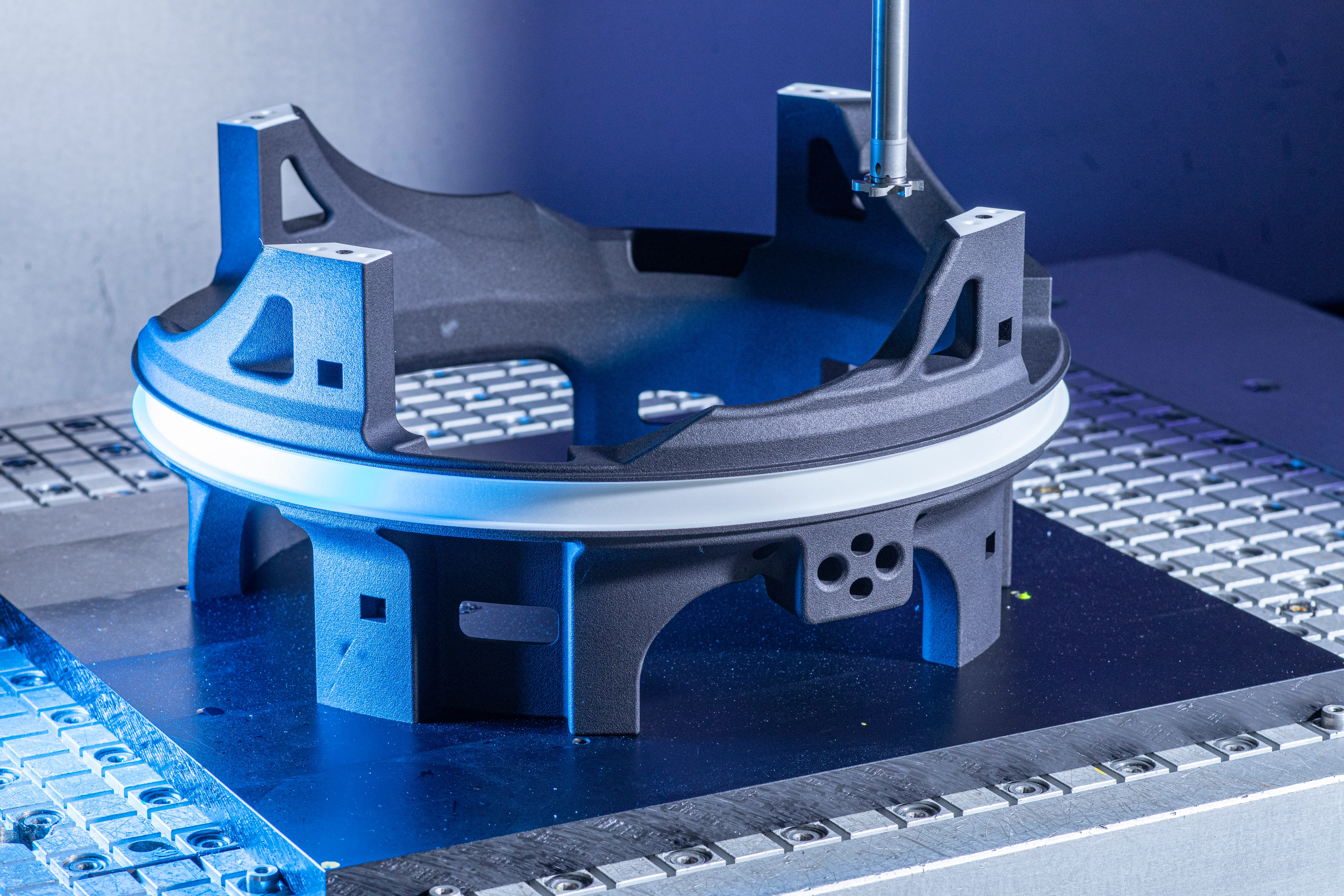
We manufacture customized connectors, test bench mounts, and special components for customers in the electronics and automotive industries—using different processes and materials depending on requirements. In the SLS process, for example, we use glass fiber-reinforced polyamide for robust, mechanically resilient components, while in photopolymer printing (DLP, SLA) we use photoresin materials with high impact resistance and high heat resistance to create filigree geometries and precise drill holes. Our additive manufacturing solutions are used in test bench construction, electronics development, and small series of special connectors, among other things.

Additive manufactured connectors and test bench components for electronics development
#APPLICATIONEXAMPLE
We manufacture customized connectors, test bench mounts, and special components for customers in the electronics and automotive industries—using different processes and materials depending on requirements. In the SLS process, for example, we use glass fiber-reinforced polyamide for robust, mechanically resilient components, while in photopolymer printing (DLP, SLA) we use photoresin materials with high impact resistance and high heat resistance to create filigree geometries and precise drill holes. Our additive manufacturing solutions are used in test bench construction, electronics development, and small series of special connectors, among other things.
Additive manufactured connectors and test bench components for electronics development
#APPLICATIONEXAMPLE
We manufacture customized connectors, test bench mounts, and special components for customers in the electronics and automotive industries—using different processes and materials depending on requirements. In the SLS process, for example, we use glass fiber-reinforced polyamide for robust, mechanically resilient components, while in photopolymer printing (DLP, SLA) we use photoresin materials with high impact resistance and high heat resistance to create filigree geometries and precise drill holes. Our additive manufacturing solutions are used in test bench construction, electronics development, and small series of special connectors, among other things.

Dealing with electrostatic discharge (ESD) plays a key role in the semiconductor and electronics industries. Depending on the application, materials with different electrical properties are used to protect components or control electrical currents in a targeted manner.
- Electrically conductive: Conductive plastics have very low electrical resistance. They dissipate electrical charges immediately – similar to metals. This reliably prevents sparking or static charging and protects sensitive electronic components.
- Dissipative: Dissipative materials dissipate electrical charges in a controlled and slow manner. This prevents sudden voltage equalization, which could damage electronic components. These materials are ideal for working environments where controlled ESD management is required.
- Insulating: Insulating plastics have very high electrical resistance and do not allow electrical currents to flow. They are used to separate electrical components from each other and prevent unwanted current flows or short circuits.
ESD-capable components
#ADDITIVEMANUFACTURING
For electronics applications, we offer various options to manufacture additive components with electrostatically dissipative or conductive properties:
- SLS with ESD coating: Components made from PA2200 are coated with an ESD varnish, which adheres optimally to the rough SLS surface and creates a uniform dissipative surface. The conductivity is surface-based and is particularly suitable for larger or visually demanding components.
- FLM with ESD materials: Materials such as ABS ESD or PETG ESD provide volumetric conductivity – even if damaged, the ESD functionality remains intact. This option is especially robust and ideal for functional components in test bench construction or electronics assembly. This way, we can select the best solution for you depending on the requirement and application location.


Murflor® + Carbon 25% black
produced on the basis of PTFE

Murytal® ESD black
produced on the basis of POM-C

Original S® plus+ LowFriction ESD
produced on the basis of PE-UHMW TG 1.1

.jpg%3Fts=1741862267)